Republican U.S. Senate candidate Ken Paxton has made it clear that the standard of debating your opponent is fading. That fade is a threat to our democratic values. In American history, there has long been a customary virtue in our democratic republic to debate your opponent when running for a high profile political office that has been honored for around 250 years. However in recent times, both sides of the political spectrum have put this virtue in jeopardy, and with that our connection to and between candidates.
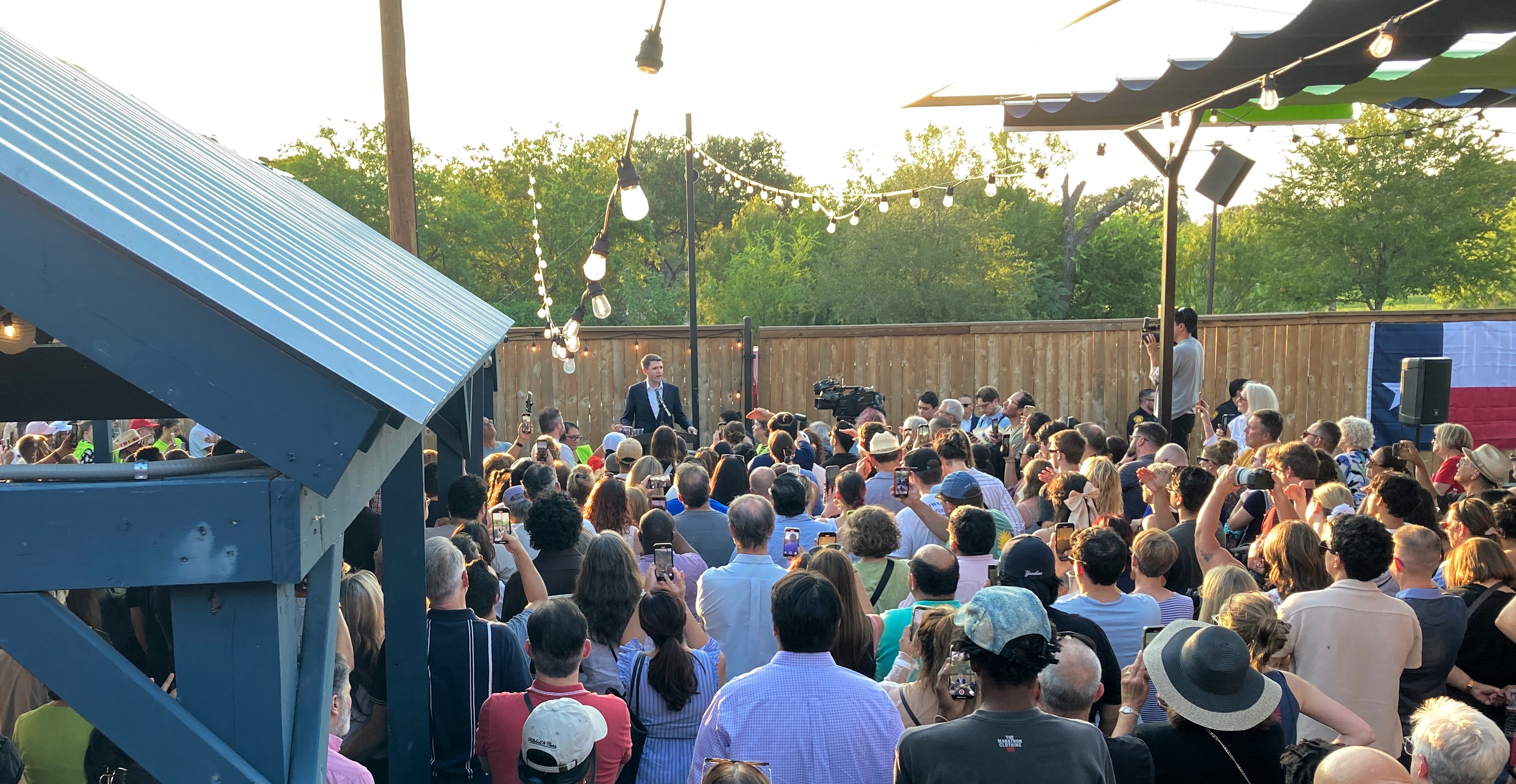
After winning his primary election on March 3, Democrat James Talarico had challenged Republican Ken Paxton to three local TV debates: one in South Texas, one in Austin, and one in Dallas. Each time, however, Paxton has refused to debate Talarico in any setting. As the election nears with just about a month to go, Talarico has given Paxton one final offer to debate in front of the electorate when on Sep. 24 during an interview at the Texas Tribune Festival where Talarico offered to debate Paxton on Fox News, a traditionally conservative news outlet, because he wanted to give Paxton a “safe space” to debate in.
This avoidance from Paxton isn’t new, though. From his 2014, 2018 and 2022 Texas Attorney General campaigns, he refused to debate his opponents a single time. Political experts such as Professor Billy Monroe from Prairie View A&M University say that the reason he hasn’t debated in such a long time is because he relies on ad blitz campaigns and rallies to get his message across to the Texas electorate for each election. His advisors say that Paxton would indeed be open to participating in a debate of such kind; however, they want to make sure that there wouldn’t be any bias in the moderators of the debate. Now this is quite strange to say from their part because all three of the proposed debates were to be hosted by local Texas television stations with independent moderators.
When we take a look at the broader picture, more and more candidates across the country are refusing to debate their opponents, with less than half of the Senate races this year having debates before the midterm elections. A study done by ABC News showed that in 2018, only 5.5% of governor races didn’t have a debate, and this year it will be 58.3%. This then begs the question of why are more and more candidates dropping the societal custom of debate and argumentation in favor of plain ads and rallies? Have political debates in the first place even had an impact of swaying voters’ minds by voting for the other candidate?
Some candidates are answering these questions quite candidly. One example is Democratic Governor candidate Amy Acton from Ohio refusing to debate her Republican counterpart, Vivek Ramaswamy, due her not wanting to promote his “baseless lies” for such a serious election. Another is Alabama’s governor race with Republican candidate Senator Tommy Tuberville refusing to debate his Democratic counterpart, Doug Jones, saying, “there’s so much difference between us. I mean, there’s no reason to get up there and argue about differences of opinion”. This trend shows that both sides of the political aisle are shifting away from standard debating practice purely based on what the other person is saying, even though the disagreements and call-outs of live TV debates are what makes the voter more knowledgeable than only listening to their preferred candidate. If this continues, voters might be willing to become more and more partisan and only vote for their party’s candidate without hearing what the other candidate might have to say.
This stark shift in campaign format is deeply troubling for a few reasons. Voters not only don’t get to see the two candidates engage in some form of bipartisanship by being on the same stage together, but also they don’t get to see how candidates act in unscripted and stressful situations, which will more than likely be present in their prolific professions. By being prevented from witnessing candidates in high stakes situations, voters won’t know how the candidate will truly be able to handle the responsibilities that come with their office and therefore blindly vote for a candidate without getting to see all of their qualifications.
As we approach the midterm elections, voters will be increasingly unaware of what their candidate believes in and even if they’re qualified for the job. This is a serious threat for civic participation and republicanism, two of the foundational aspects of our democracy. This threat needs to be addressed before we start diverging farther and farther away from our democratic values.
Julian Kusnierz is a weightlifter, musician, and writer for On the Record. He is a freshman and studies Public Policy in the College.