
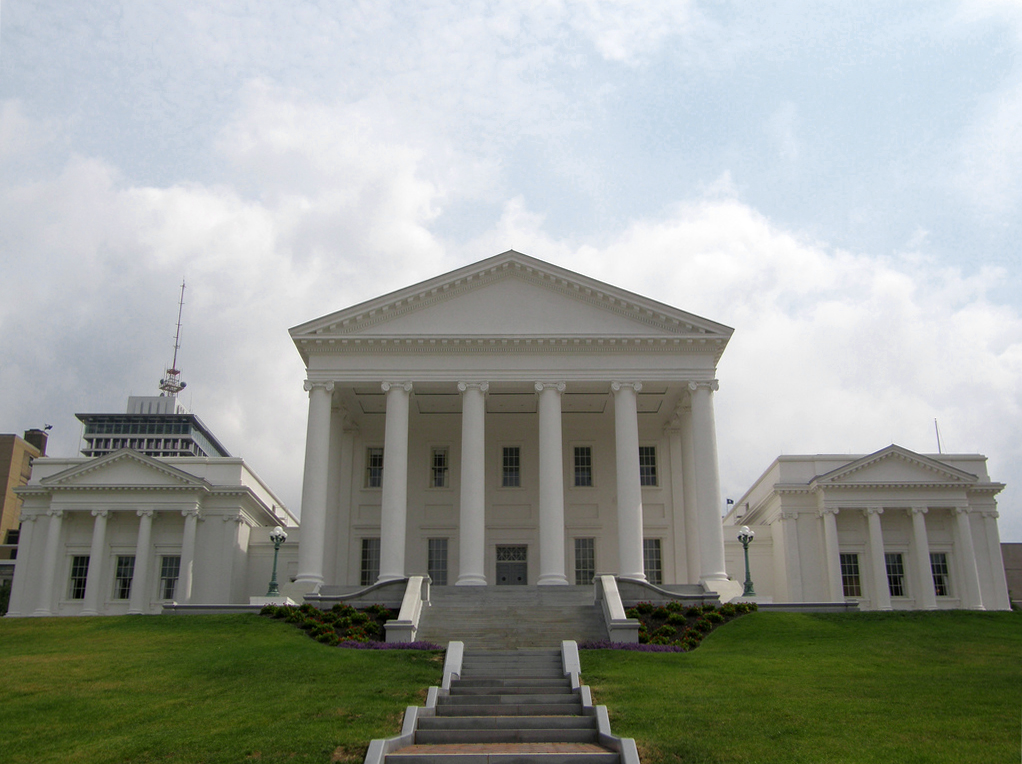
The intra-party clash between Virginia Democrats over the sales and use tax exemption incentivizing the construction of artificial intelligence data centers exposes a party-split between pro-business advocates and lawmakers apprehensive about rising residential energy prices.
The Virginia State Senate has voted in bipartisan fashion to eliminate the tax breaks. However the House and Virginia's governor, Abigail Spanberger (D), seem in favor of maintaining the incentives in hopes of enabling the state's fast-growing industry and preserving business promises.
The debate concerns the sales and use tax exemption for companies building AI data centers worth over $1.6 billion, which has made Virginia into the world's largest data hub.
The conflict in Virginia's legislature reflects a broader national challenge for the Democratic Party, in which state leaders with large-scale AI investments are balancing their commitments to tech companies with a Democratic base that wants Congress to pass massive regulation.
The deliberation comes on the heels of President Trump's recent announcement of over $90 billion in AI investment in Pennsylvania as his insistence grows on U.S artificial intelligence dominance to outperform China. Trump's pro–AI agenda has landed AI billionaires on his side, fueling Trump's 2024 presidential run and casting the Democratic Party as prominently anti–AI.
“We have to grow that baby and let that baby thrive,” Trump stated to NPR, emphasizing deregulation plans. “We're gonna win it, because we will not allow any foreign nation to beat us.”
The Democratic Party appears caught in the middle of its own base surrounding their AI approach – pro–AI Democrats risk alienating environmentalists, blue–collar workers, and residential suburban communities, while anti–AI Democrats risk diminishing any remaining support from the tech industry, both of which may prove critical for success in 2026 and 2028.
In addition to over $80 billion in large-scale investment in Virginia, proponents of tax incentives argue the resulting job growth from the industrialization of artificial intelligence solidifies Virginia as a pro-business, pro-labor leader of the booming industry and supports high–quality employment opportunities in the commonwealth, especially union jobs that risk being transplanted elsewhere.
“If the tax incentive is not there, data centers will not be there, and construction jobs will leave,” Jeff Rowe, a manager at International Brotherhood of Electrical Workers (IBEW) 1340 in Newport News, Virginia stated. “These valuable positions paying six figures allow workers to reinvest wages into the Virginia economy, and union members prefer staying near their families.”
Democrats who oppose these tax incentives risk losing support from union workers like IBEW members, ranging from HVAC workers to electricians, who have historically been a loyal foundation and core voting bloc of the Democratic Party; in the 2024 election cycle, over 95% of IBEW's PAC money for federal candidates went to elect Democratic officials.
A study published by the Joint Legislative Audit and Review Commission found that data center construction brought over $5.5 billion in labor earnings and over 74,000 jobs to Virginia in 2024, however voters are wary about their increasing household energy costs despite the promising economic results.
House Delegate Sam Rasoul (D) echoed increasing frustrations being voiced by the surrounding communities, where Virginia residents are growing disillusioned by data centers leading to rising electrical bills, energy costs, and the proximity of industrial sites to their residential homes.
“Many of our localities are struggling to balance their budgets, while the Data Center industry is making record profits,” Rasoul's office stated. “Residents are being burdened with power generation expenses through household bills while data centers should contribute their fair share.”
Almost 2 out of 5 Americans currently believe the U.S. economy is “poor,” according to a recent UMass Amherst poll – and the booming AI buildout surge is not quieting Virginian residents' apprehensions. A recent poll of Virginia voters from the Washington Post-Schar School found that only 37% of voters support data center tax breaks, significantly down from 61% in 2023.
These concerns are juxtaposed by Virginia House members who desire to preserve existing tax incentives and honor investments of companies – like Meta, Amazon, and Google – who often pour millions of dollars into PACs to support pro-AI data center development candidates.
For example, Meta just pledged their largest election financial contribution of $65 million towards state officials in Texas and Illinois championing AI sector expansion, signaling their move to financially back their AI agenda through influencing elections. Meta also launched two self–started super PACs specifically designated to AI investments.
One of these data center infrastructure companies, the Data Center Coalition based in Leesburg, Virginia, believes that defending the tax incentives currently in place is critical to Virginia's economic growth and reputation as a pro-business state.
“The sales and use tax exemption treats data centers exactly like manufacturers, and other capital-intensive businesses that do not pay sales tax on their essential equipment,” Nicole Riley, spokesperson for the Data Center Coalition noted. “Data center firms make multi-billion investments strengthening America's infrastructure while creating high-wage positions and generating billions in revenue.”
Amid increasing demand for data centers nationwide, these companies must reconcile skyrocketing electricity prices – up 267% in the last five years for places near data centers – and the fact that data centers account for 63% of this rise in cost, according to NBC News.
The live-wire rift in Virginia that is dividing the state legislature over tax breaks for data center companies is a national call on voters – and parties – to decide their priorities as the power struggle gridlocks.
Kennedy Moore is a freshman studying Government with minors in Journalism and French in the College of Arts and Sciences from Bethesda, Maryland.