
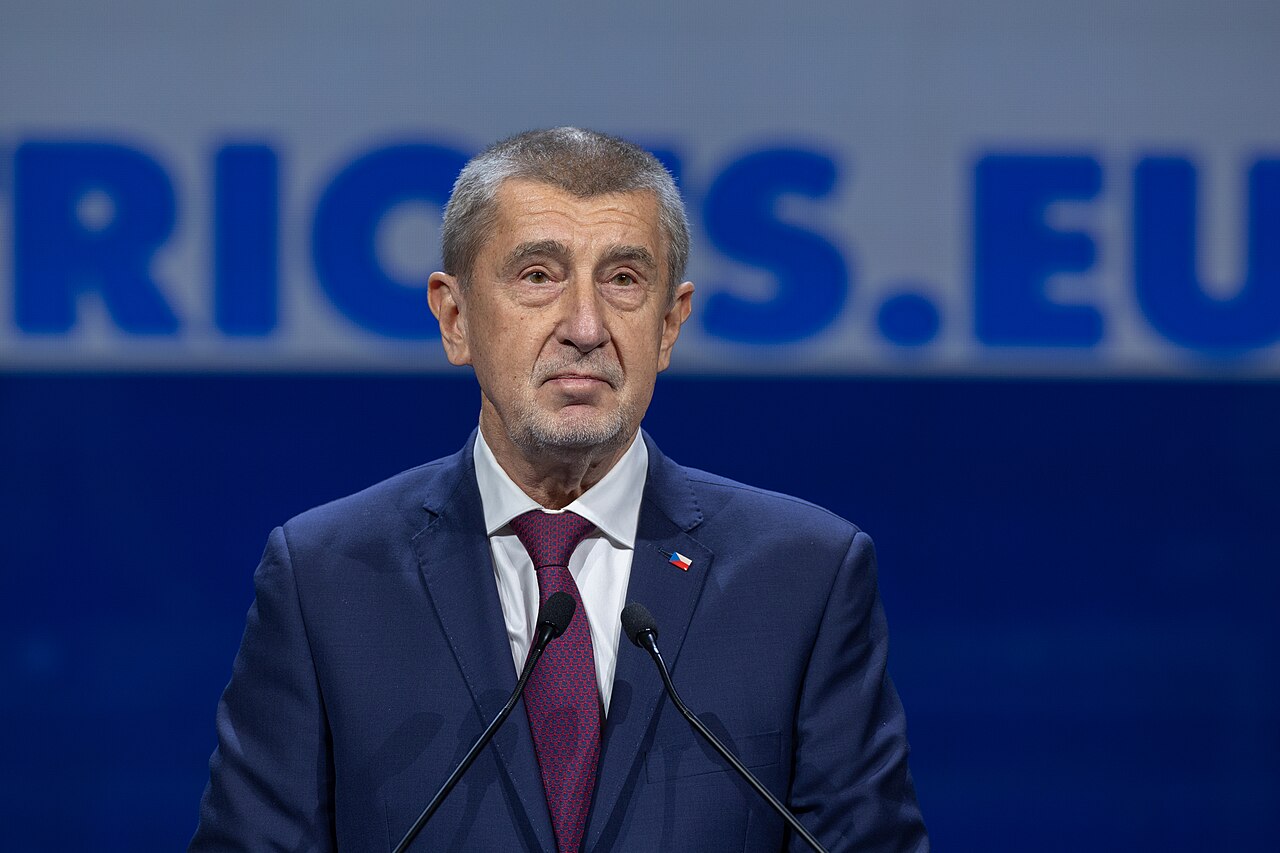
In early October 2025, the Czech electorate followed the European slide to the far right. Andrej Babis—once again—has positioned himself at the heart of Czech politics through his party ANO (Yes) movement, securing roughly a third of the vote and a coalition with parties further to his right.
Some have tried to treat this as a regional anomaly, as just another eastern-European right-turn. But a deeper look reveals something far more consequential: this is not a turn of the Czech Republic alone, but rather a crystallisation of what the European Council on Foreign Relations (ECFR) calls “the new normal of the Western world.”
Many parallels have been drawn between Babis and Donald Trump: a billionaire outsider turned political figure, riding a wave of populism, customising his rhetoric to shifting public mood rather than abiding by rigid ideology. Babis governed as Czech prime minister from 2017-2021, but after a period out of power he returned in 2025 with ANO polling strongly and making overtures to far-right coalition partners.
What makes this moment noteworthy is not simply Babis's comeback, but the way it underscores how populist, nationalist-leaning politics have embedded themselves in mainstream European democracy—with credible, electorally viable leaders not relegated to the margins.
This election should not be read as an outlier—it is emblematic of a broader European transformation. The mechanisms of liberal democracy remain in place, but the underlying values and assumptions that previously defined the “centre” have changed.
Nationally, Babis has pledged to review Czech participation in Ukraine-related defence efforts, to challenge Brussels on migration and climate regulation and to form a coalition including the far-right Freedom and Direct Democracy party (SPD) and the right-wing “Motorists” party.
In coalition terms, Babis's ANO joined the “Patriots for Europe” group in the European Parliament, alongside Austria's Freedom Party, Spain's VOX, Hungary's Fidesz and France's National Rally. This signals that the Czech result is part of an interconnected ecosystem of nationalist/populist parties.
Globally, the tilt matters for the transatlantic project, NATO and the liberal order more broadly. If more EU states elect leaders who are critical of deeper European integration, sceptical of climate-mandates and hesitant to commit to military support for Ukraine, then the collective posture of the West could shift.
The significance of this election lies in what it confirms: the mainstreaming of populist, nationalist currents that were once considered fringe. The question now is how other European democracies will respond.
Aiyana Kaul is a staff writer for On The Record based in London, UK, and a freshman at Georgetown's School of Foreign Service studying International Politics.